
Standards Into Systems: A Structural Approach to Professional Learning Plan Design
Professional learning plans typically include goals, theories of change, logic models, and KPIs—but these components often sit in separate sections, disconnected from one another. When someone asks, “Does this KPI actually measure this goal?” the answer requires re-reading prose and making inferences. This is not a writing problem; it is a structural one.
This session introduces a methodology that explicitly links each component of a professional learning plan. Goals, structured around Killion’s KASAB framework, connect directly to KPIs distributed across Guskey’s five levels of evaluation. These, in turn, trace through a theory of action with testable hypotheses and connect back to a logic model with measurable outcomes.
Participants will engage with a working system that makes these relationships visible and traceable, and will examine where their own plans may contain structural gaps.
The session concludes by exploring how AI can accelerate this design process—not by replacing professional judgment, but by generating structurally coherent drafts, identifying misalignments, and strengthening the integrity of the overall system.
Facilitated By
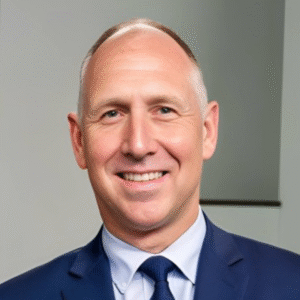
Scott Williams
Associate Director of Educational Programs, Shanghai American School
Scott Williams is Associate Director of Educational Programs at Shanghai American School (SAS), where he empowers learning, enables collaboration, and bridges ideas across diverse educational contexts. With 23 years of experience spanning four countries, Scott architects comprehensive systems that integrate curriculum design, professional learning, and coaching to translate research into measurable classroom impact.
At SAS, Scott leads strategic development of curriculum initiatives and the Coaching Program, working with 15 instructional and technology coaches across two campuses. His approach, informed by emerging AI applications and evidence-based practices, has transformed coaching from helpful conversations to evidence-rich growth cycles that elevate both teaching practice and student learning.
A skilled facilitator with deep expertise in collaborative team development, Scott leverages coaching foundations and research-based facilitation strategies to navigate complexity and build collective capacity. His systems innovations address the adaptive challenges facing modern education—from aligning curriculum frameworks and professional development systems to implementing knowledge management tools under the “One School” vision. Through this work, he creates sustainable structures where educators thrive and students succeed.


